If you wake up with a sore shoulder, an aching hip, or a stiff lower back, your mattress is concentrating your body weight into a handful of pressure points. Here is how pressure mapping finds the mattress that spreads that pressure out — in about 10 minutes, for free.
When you lie down, your body weight is not spread evenly. Shoulders and hips carry most of it, so a mattress that is too firm pushes back into those spots while a mattress that is too soft lets your spine sag. Either way, the result is the same: pressure builds, circulation slows, and your body nudges you to roll over — again and again, all night.
Side sleepers usually feel it in the shoulders and hips
Back sleepers tend to feel it in the lower back and sacrum
Stomach sleepers often feel it in the neck and rib cage
Combination sleepers feel all of the above as they move
This is why a mattress that works beautifully for one person can be a poor mattress for pressure points for someone else. Your build, your sleep position, and your pressure distribution are unique — and the right surface has to answer to them, not to a generic “firm” or “soft” label.
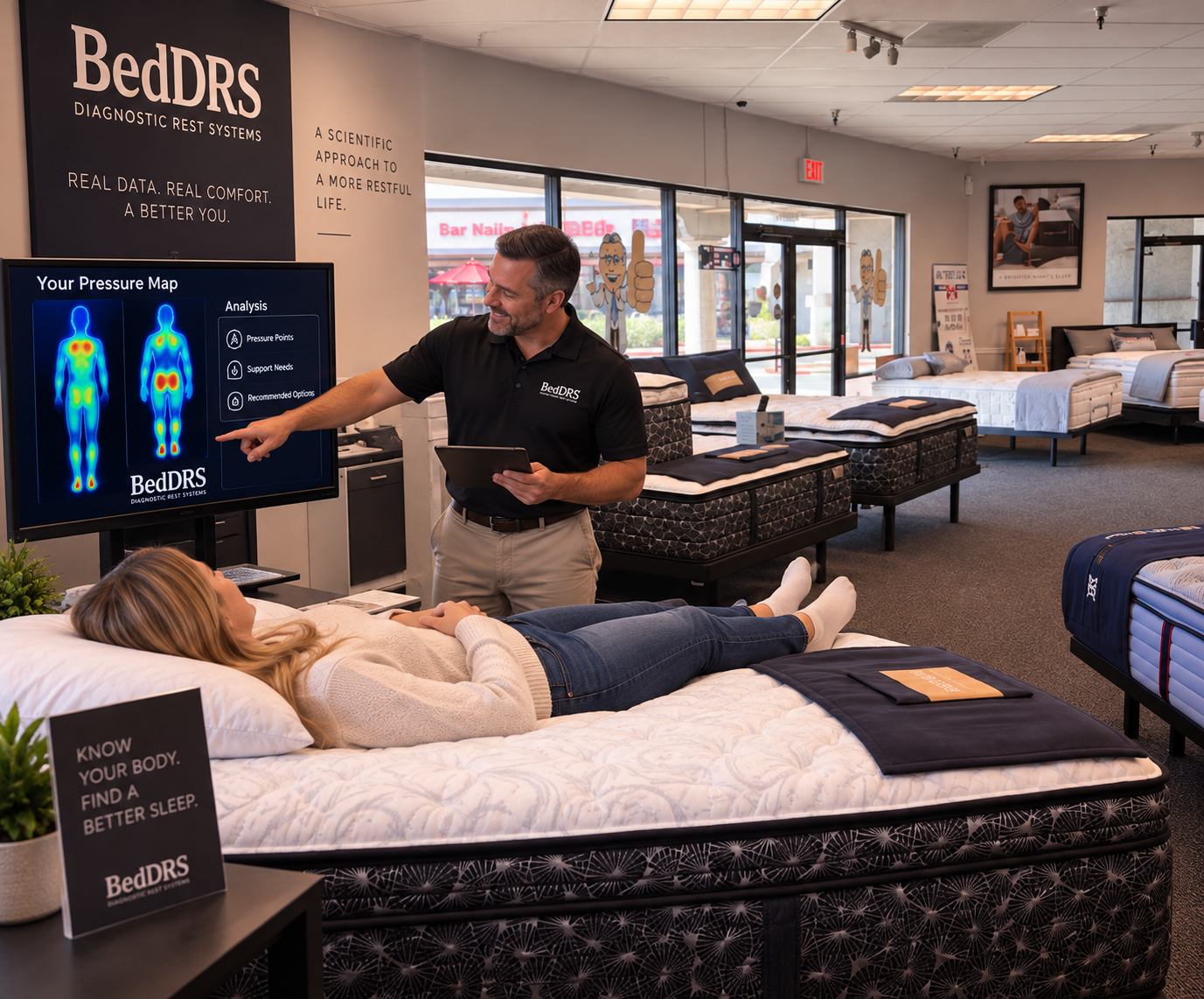
During the free Sleep Lab experience at Bed DRS, you lie back in your normal sleeping position on a sensor mat with more than 1,000 sensing points. In seconds, it shows exactly where your body pushes hardest into the surface — your personal pressure map.
We then test mattresses against that map until we find the options that actually reduce your hot spots. Instead of hoping a showroom feel translates to eight comfortable hours, you choose from mattresses already proven to relieve your measured pressure points.
Whatever brand or construction you end up with, a mattress that relieves pressure points tends to do these three things:
It lets heavier areas — shoulders and hips — sink slightly, so pressure spreads across the surface instead of pooling
It keeps your spine neutral, supporting the waist so your back muscles can fully relax
It matches your sleep position — softer at the surface for side sleeping, firmer support for back and stomach sleeping
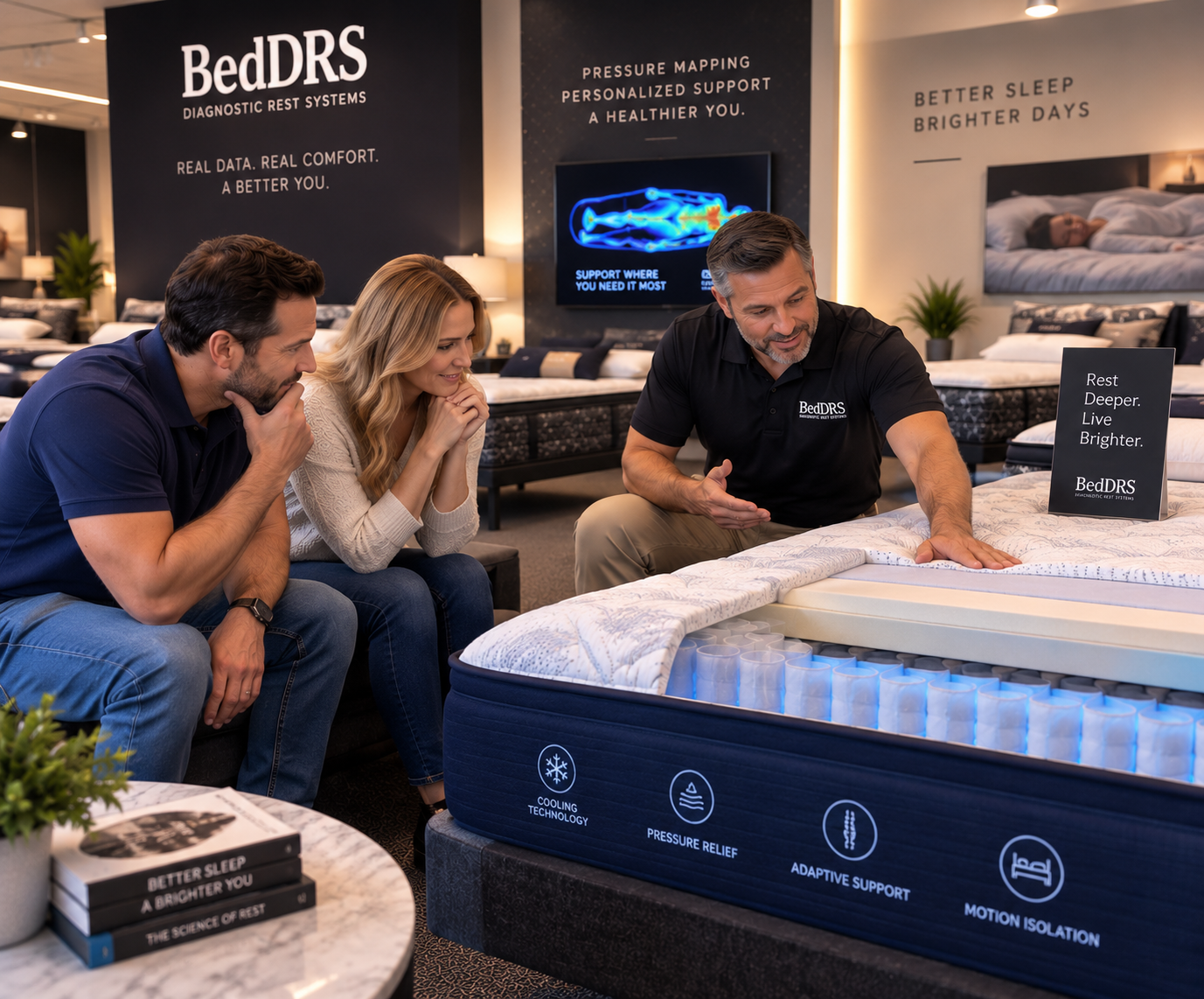
The only way to check all three for your body is to measure. That is exactly what the Sleep Lab does — and why it narrows the entire showroom down to three mattress matches in about 10 minutes.
Your pressure-matched recommendations are not limited to one manufacturer — featured brands include Aireloom, Beautyrest, Sealy, Stearns & Foster, Tempur-Pedic, and more.
Reserve a free Sleep Lab experience at our Scottsdale showroom. A Bed DRS team member will contact you to confirm your appointment.
No wires or equipment attached to you
Fully clothed, no need to sleep — you just lie back
Come alone or bring your partner and map both of you
No pressure and no obligation to buy
The best mattress for pressure points is the one that relieves pressure at your shoulders, hips, and lower back — which depends on your body, sleep position, and weight. That is why Bed DRS uses pressure mapping instead of guesswork: the sensor data shows exactly where your body builds up pressure, so recommendations are matched to you rather than to a generic label like “firm” or “soft.”
A mattress relieves pressure points by conforming to the heavier and curvier parts of your body — typically shoulders and hips — so those areas sink in slightly while your waist and lower back stay supported. When pressure is spread evenly, blood flows normally and you toss and turn far less during the night.
There is no single right firmness. Side sleepers usually need a surface soft enough at the shoulder and hip to avoid pressure buildup, while back and stomach sleepers often need more support to keep the spine aligned. Pressure mapping at Bed DRS shows your actual pressure distribution so firmness is chosen from data, not trial and error.
Yes. During the free Sleep Lab experience you lie on a sensor mat with more than 1,000 sensing points that capture your pressure distribution in your normal sleeping position. The results identify three mattress options — across multiple brands — that best reduce your measured pressure points, all in about 10 minutes.
It is free. The Sleep Lab experience costs nothing, takes about 10 minutes, and carries no obligation to buy. Walk-ins are welcome at our Scottsdale showroom, and reserving a time is recommended.